Revealing Capabilities: How Montessori Methods Change Learning for Every Child
Montessori methods provide a distinctive method to education that stresses independence, curiosity, and critical thinking. By establishing prepared environments and employing interactive resources, these methods cater to different educational preferences. Mixed-age classrooms foster teamwork and enable children to progress at their own speed. This holistic approach not only improves educational abilities but also promotes personal growth. What consequences does this hold for the educational landscape? Exploring these inquiries reveals deep understanding.
The Core Tenets of Montessori Education
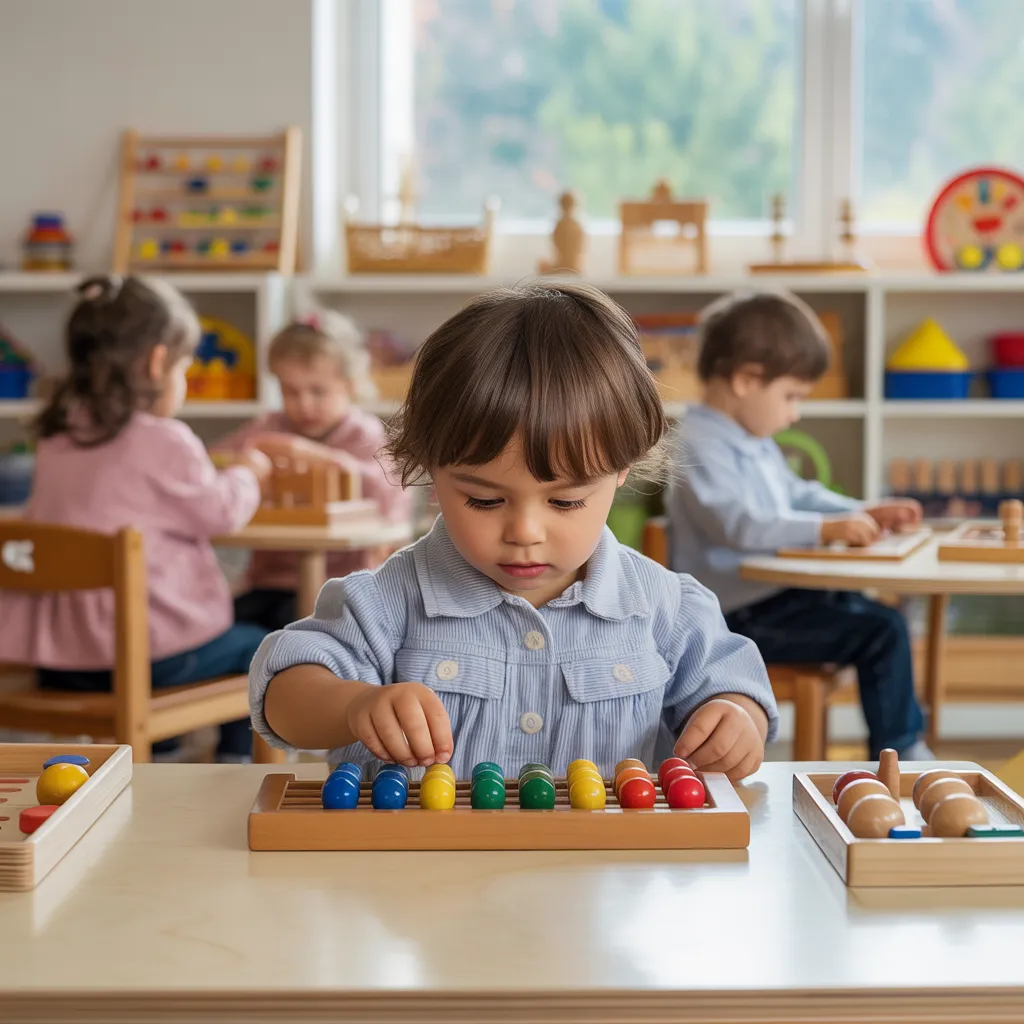
The foundation of Montessori education is built upon several key principles that guide its learning method. Central to this philosophy is the conviction in the background information inherent potential of each child, emphasizing respect for their unique developmental pace. The prepared environment plays an essential role, created to foster exploration and self-directed activity. Materials are thoughtfully chosen to be interesting and developmentally appropriate, allowing children to learn through hands-on experiences. Moreover, the Montessori method fosters a mixed-age classroom setting, facilitating collaboration and peer learning. Teachers act as mentors rather than traditional instructors, supporting education while observing and supporting each child's unique journey. This holistic approach not only nurtures cognitive skills but also social and emotional development, fostering a lifelong love for learning. Through these principles, Montessori education aims to create independent, confident learners who are equipped to navigate the world around them.
Montessori Method Develops Independence in Students
Montessori education uniquely encourages independence in children through self-directed learning, allowing them to take control of their educational journey. By focusing on practical life skills, children gain confidence in their abilities to handle everyday tasks. Moreover, the freedom of choice motivates them to make decisions, further improving their autonomy and self-reliance.
Supporting Personal Learning Development
Promoting independence in children, the Montessori approach focuses on self-directed learning as a key element. This method encourages children to take control of their educational path, letting them to select activities that suit their interests and developmental levels. Through a carefully prepared environment stocked with materials, educators promote exploration and discovery, enabling students to seek knowledge at their own speed. This self-governance not only builds critical thinking and problem-solving abilities but also fosters a sense of accountability. As children participate in self-directed activities, they gain confidence in their skills, increasing their intrinsic motivation. In the end, this method nurtures lifelong learners provided with the tools needed to navigate an ever-changing world, establishing a solid foundation for future educational pursuits.
Practical Life Abilities
Empowering youngsters to master practical life skills is a cornerstone of Montessori education. Through hands-on activities, youngsters learn fundamental tasks such as pouring, sweeping, and dressing, which cultivate independence and confidence. Age-appropriate by design, these activities enable children to proceed at their individual pace. Engaging in real-life skill practice allows them to improve fine motor coordination and cognitive abilities, reinforcing their feelings of accomplishment. Furthermore, focusing on responsibility strengthens a bond with their environment and community. As they complete these tasks, youngsters build problem-solving skills and an awareness of the results of their actions. In the end, practical life skills prepare youngsters for everyday life and instill a lifelong passion for learning and independence.
Liberty of Preference
Children who take part in practical life skills create a solid base for independence, which is strengthened by the freedom of choice inherent in Montessori education. This approach allows children to choose tasks that align with their growth requirements, fostering a investment over their studies. By deciding for themselves, they learn to assess their preferences, manage time, and strengthen ability to solve problems. This autonomy promotes internal motivation and confidence, as children navigate their educational journey at their personal speed. Additionally, the environment is carefully designed to enable these decisions, with materials available and inviting. As an outcome, children in Montessori environments not only foster independence but also create a lifelong love for learning through inquiry and investigation.
The Way Interactive Learning Sparks Curiosity
Hands-on learning works as a motivator for curiosity in children by engaging their senses and inspiring active participation. This approach supports independent exploration, permitting students to discover concepts through their own experiences. Additionally, it develops creative analytical abilities, enabling learners to navigate challenges in original ways.
Enticing With Sensory Experiences
Many investigations stress the significant influence of tactile engagement in primary learning, illustrating how tactile interactions can ignite fascination. In Montessori classrooms, children interact with materials that stimulate their senses, advancing exploration and education through touch, sight, sound, and movement. For example, employing sandpaper letters permits children to feel the shapes of letters while at the same time learning to identify them. This multisensory approach not only strengthens mental development but also fosters emotional connections to the learning process. As children manipulate various objects, they develop fine motor skills and spatial awareness, essential for future academic success. Ultimately, sensory experiences create a vibrant, engaging environment that nurtures curious minds, transforming learning a dynamic and enjoyable journey.
Fostering Self-Directed Exploration
Building on the importance of sensory experiences, nurturing independent exploration acts as a natural extension of Montessori principles. Within this strategy, children are encouraged to engage with their environment freely, enabling them to explore their curiosities and questions. Hands-on learning activities create opportunities for students to work with materials and grasp concepts at their own pace. This autonomy not only stimulates curiosity but also fosters confidence, as children learn to trust their instincts and make choices. By providing an environment rich in resources and tools, educators assist this exploration, guiding children to follow their inherent inquisitiveness. Ultimately, nurturing independent exploration builds a lifelong enthusiasm for learning, empowering children to seek knowledge beyond the classroom.
Fostering Creative Problem-Solving
Engaging with tactile materials ignites children's imaginations and encourages creative solution-finding. In Montessori environments, hands-on activities allow children to explore concepts through direct interaction. This approach fosters curiosity, allowing learners to test ideas and iterate on their thoughts. When faced with challenges, children discover how to devise multiple solutions, strengthening their analytical reasoning skills.
The implementation of hands-on materials, such as building blocks or art supplies, invites experimentation and risk-taking in a safe space. Children are encouraged to ask questions and seek answers on their own, developing resilience and adaptability. This method supports not only learning abilities but also emotional intelligence, as children collaborate and share insights. Ultimately, Montessori strategies reshape traditional learning by empowering students to become resourceful problem solvers.
How Montessori Frameworks Maximize Academic Accomplishment
Montessori methods foster a unique educational setting that enhances scholastic achievement by encouraging independent inquiry and critical thinking. In this approach, learners work with tactile tools that address various learning styles, supporting greater comprehension of principles. The emphasis on personalized education allows children to progress at their own pace, fostering a sense of ownership over their education.
In addition, the heterogeneous groupings support peer learning, where younger students can acquire knowledge from older peers, anchoring knowledge through teaching. This collaborative atmosphere enhances communication skills and inspires a love for learning. Teachers serve as guides rather than typical educators, catalyzing inquiry and exploration.
Assessment in Montessori settings stresses expertise rather than evaluations, enabling students to build intrinsic motivation. As a result, children often show greater academic resilience, producing improved performance in standardized assessments. Overall, Montessori methods provide a firm foundation for perpetual learning and academic achievement.
Vital Life Proficiencies Achieved With Montessori Approach
Fostering independence and responsibility, Montessori education generates essential life skills that go above subject matter. This approach prompts children to take initiative and select their own options, fostering decision-making abilities vital for future success. By engaging in hands-on activities, students hone creative problem-solving and learn to manage time effectively. The emphasis on collaboration within age-integrated classrooms also nurtures emotional intelligence, teaching children empathy and respect for others.
Furthermore, Montessori education promotes self-discipline through organized schedules, helping children recognize the consequences of their actions. Real-life activities, such as cooking and plant care, establish a sense of responsibility and care for their environment. These experiences enhance motor skills while also build self-confidence and resilience. In conclusion, the practical knowledge acquired through Montessori education empower children to overcome obstacles and adapt to new situations, preparing them for a meaningful future.
Fitting Montessori Education to Assorted Learning Styles
Modifying educational methods to address different learning styles creates a more inclusive and impactful learning environment. Montessori education is naturally flexible, recognizing that children learn in multiple ways—visually, auditorily, and kinesthetically. By engaging with hands-on activities and materials, students engage with concepts in a way that aligns with their individual preferences.
Teachers carefully monitor each child, recognizing unique strengths and challenges. This observation informs personalized lesson plans that correspond to each learner's style, fostering greater comprehension and memory. For instance, a child who excels in spatial reasoning may gain from manipulating geometric shapes, while another might thrive through narrative methods.
This freedom builds a sense of self-governance, empowering students to take ownership of their learning journey. By recognizing and supporting diverse learning styles, Montessori education not only elevates academic achievement but also nurtures a love for learning that extends beyond the classroom.
Preparing for Enduring Achievement: The Montessori Strength
An education that respects personalized learning preferences establishes a strong foundation for continuous growth. The Montessori philosophy emphasizes self-directed learning, letting children to pursue their interests at their own rhythm. This framework cultivates deep reasoning and decision-making capabilities, fundamental attributes in an dynamic world. By nurturing self-sufficiency, students gain knowledge to take responsibility for their learning journey, positioning them for future challenges.
Additionally, the multi-age classroom space promotes collaboration and student-led instruction, strengthening social skills and emotional intelligence. Children cultivate respect for diverse perspectives, which is vital for success in global contexts. The concentration on practical, active engagement further furnishes students with applicable abilities useful beyond the classroom.
In the end, the Montessori edge is based on its all-encompassing methodology, nurturing not only academic capabilities but also personal development. This all-encompassing education system prepares children to navigate life's intricacies, making certain they possess the instruments essential for lifelong success.

Frequently Asked Questions
What Age Demographics Benefit Most From Montessori Learning?
Children aged 3 to 6 years gain significant benefits from Montessori education, as this stage encourages independence and self-directed learning. However, older age groups, including elementary students, also develop valuable skills through the Montessori approach.
In What Ways Does Montessori Education Cater to Children With Special Needs?
Montessori education supports children with special needs by providing individualized learning experiences, encouraging self-reliance, and permitting flexibility in pace. This tailored approach allows varied students to thrive in a caring and encouraging setting, promoting their unique strengths.
Do Montessori Programs Present Higher Price Tags Than Traditional Schools?
Montessori schools frequently demand increased costs versus traditional schools, primarily due to smaller class sizes, unique instructional resources, and individualized instruction. However, costs can vary considerably according to region and distinct curriculum choices.
What Background Do Montessori Teachers Need?
Montessori educators typically require a undergraduate degree and specialized training in Montessori methods, which includes both academic understanding and practical experience. Accreditation from established Montessori bodies is often necessary for teaching in accredited institutions.
How Can Parents Support Montessori Principles at Home?
Parents can facilitate Montessori philosophies at home by creating a structured space, encouraging self-reliance, offering options, promoting inquiry, and emphasizing hands-on learning. Participating in unstructured talks also strengthens critical thinking and cultivates a kid's inherent desire to explore.